Stay connected
Learn about the latest research and results from the project.
Subscribe to the NATURANCE Newsletter!
Listen to our podcast “NATURANCE Talks“
Learn about the latest research and results from the project.
Subscribe to the NATURANCE Newsletter!
The second edition of the Naturethon initiative ran from September to December 2025, featuring a revised, even more bottom-up structure. 19 groups from 14 countries submitted projects, involving 103 participants.
Naturethon Newsletter #2.1
Naturethon Newsletter #2.2
Naturethon Newsletter #2.3
Naturethon Newsletter #2.4
Naturethon Newsletter #2.5
Naturethon Newsletter #2.6
Naturethon Newsletter #2.7
To respond to the interest shown by individuals without local groups during the first edition, the 2025 Naturethon open call, titled “Citizens Growing Nature-Based Futures“, allowed individual registration through a statement of interest to form new groups. Online collaborative boards were introduced to guide participants more effectively as they developed their projects during each hands-on webinar. Once completed, the boards were compiled into a logbook, which served as the foundation for the final submission.
19 groups successfully completed the interactive process and submitted their projects for final evaluation, with 103 people actively participating. The proposals covered a wide variety of topics, ranging from flood risk to wildfires, biodiversity loss, and habitat degradation, and came from 14 countries across Africa (Ethiopia, Ghana, Malawi, Mauritania, Nigeria, and South Africa), Asia (Jordan, India, Pakistan, and the Philippines), and Europe (Italy, Georgia, Portugal, and Romania). The preliminary results were presented at the Italian National Conference on Science Communication in Trieste on 2 December 2025.
The Naturethon team reviewed all the ideas, providing operative feedback to shape feasible and meaningful actions. Representatives of the three proposals that stood out for innovation, feasibility, and social and environmental impact were hosted by the project at the Finance Innovation Festival in Brussels (February 3-5, 2026).
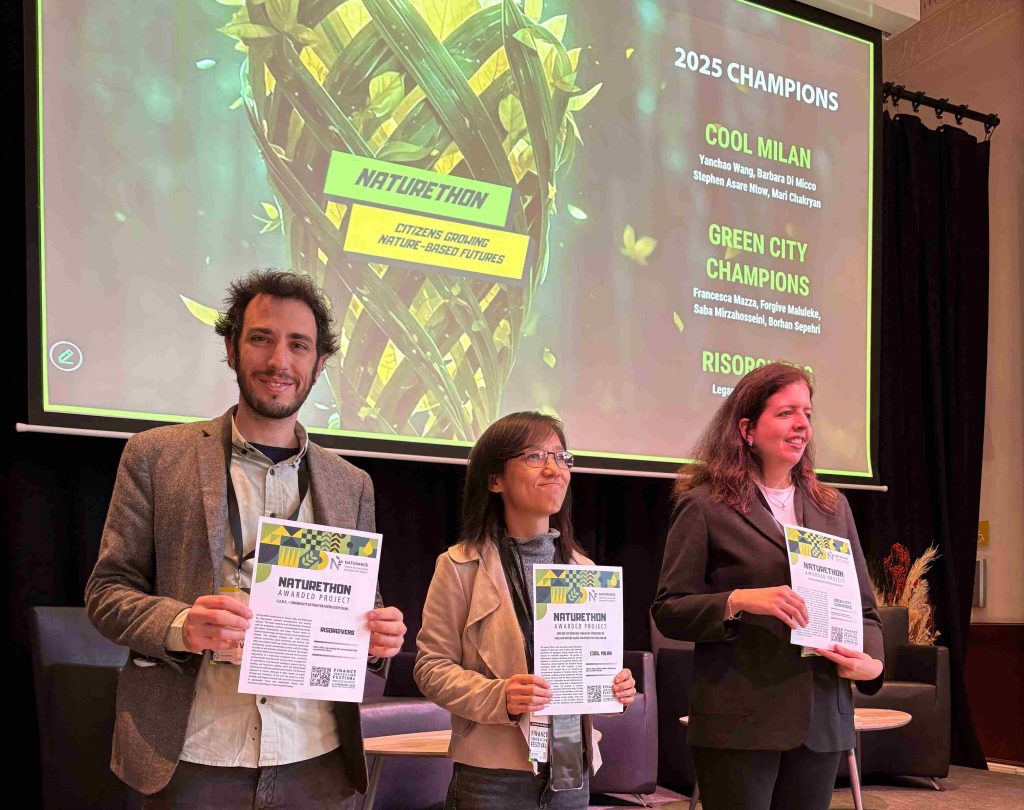

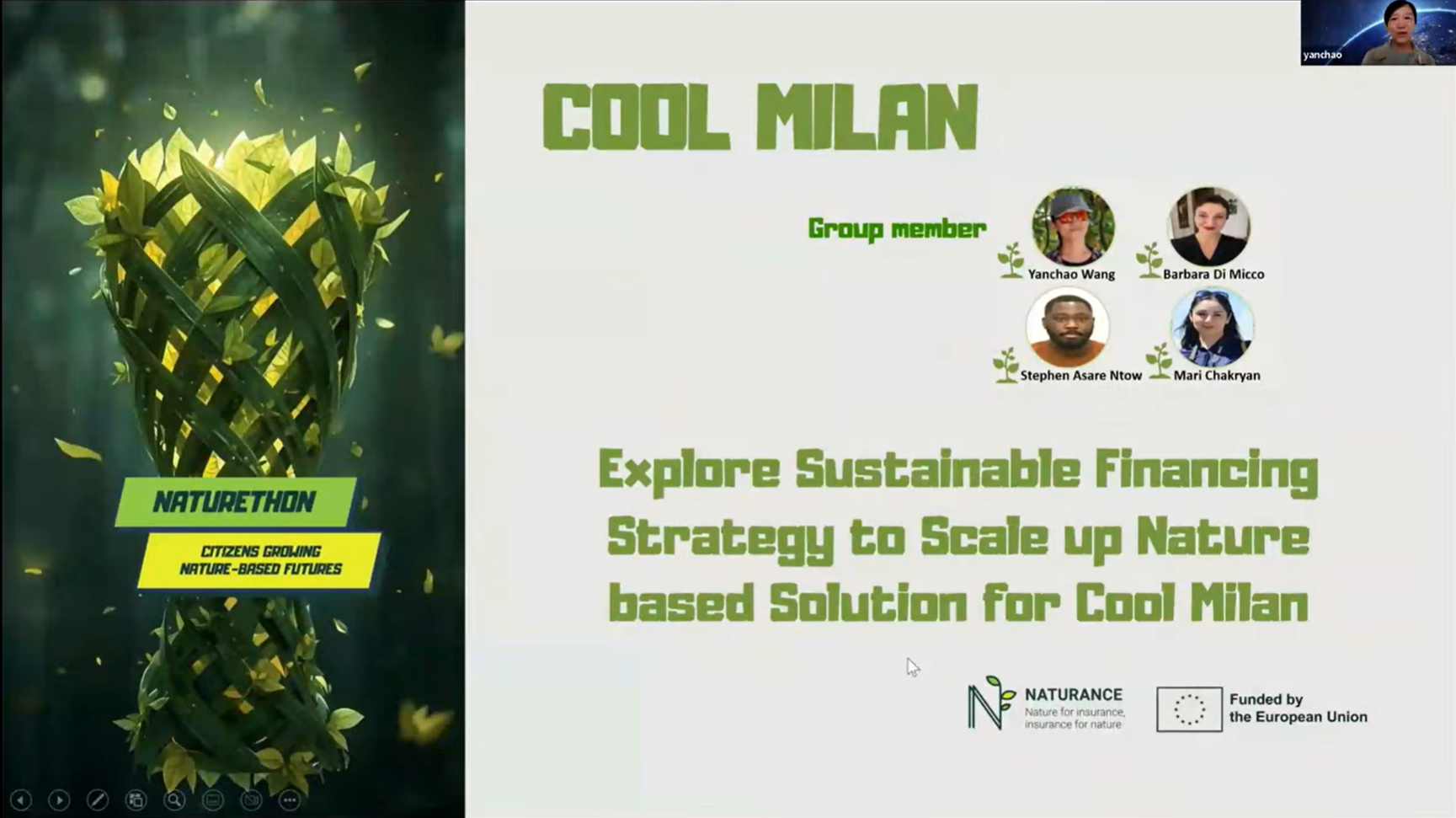
Explore Sustainable Financing Strategies to Scale Up NbS for Cool Milan (Italy)
The COOL MILAN team presented a strong, data-driven analysis of urban heat risks in Milan. Built around the 3-30-300 approach, the project proposes well-designed NbS with each intervention clearly described and illustrated through “before and after” narratives. It stands out for its innovative mix of existing and new financing instruments, strong stakeholder engagement, and a coherent, ambitious vision.

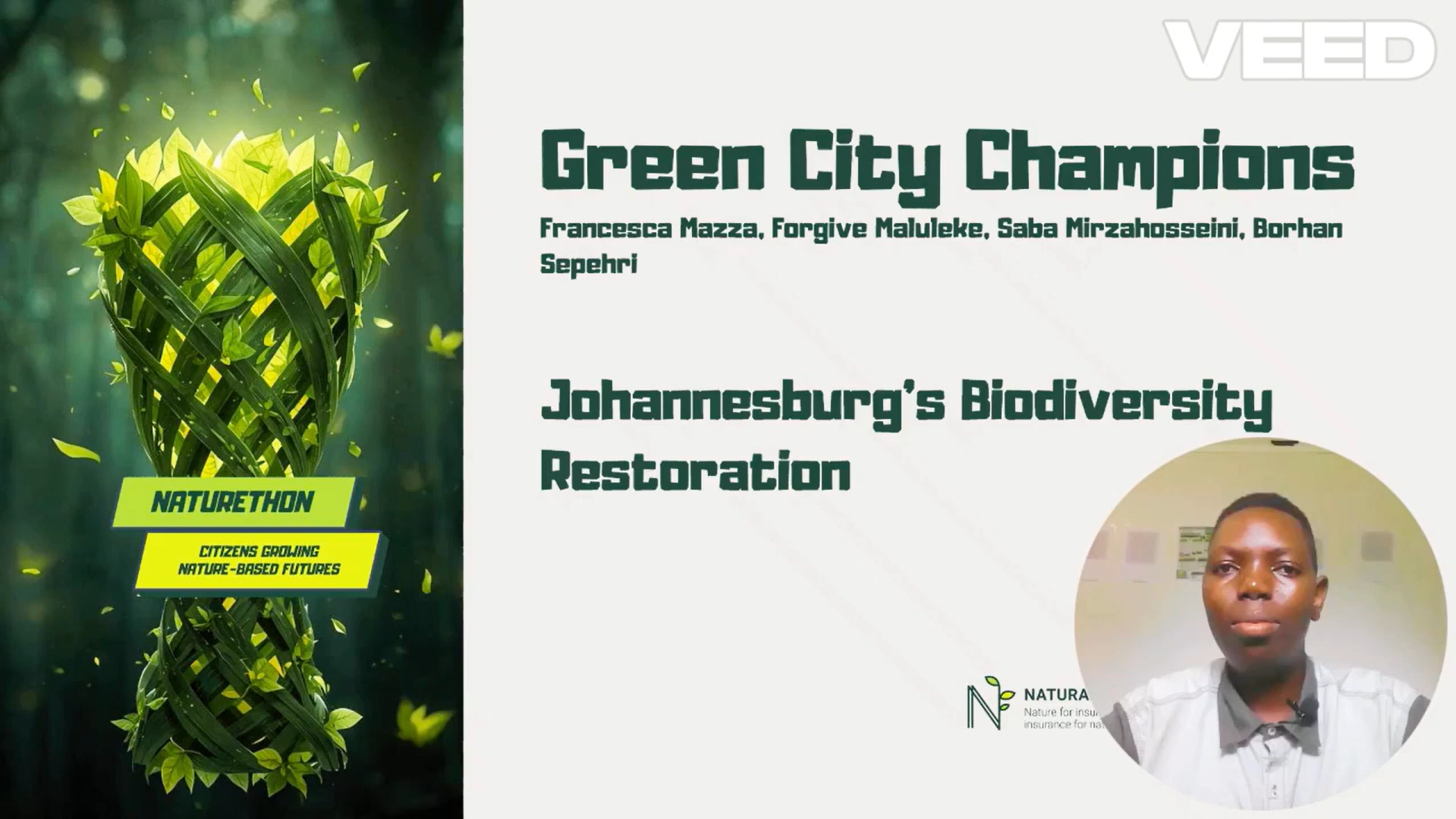
Johannesburg’s Biodiversity Restoration (South Africa)
The Green City Champions proposed a community-led NbS approach to address biodiversity loss, climate risks, and social challenges in Johannesburg. Combining urban greening, habitat restoration, and community farming, the project stands out for its strong stakeholder engagement, scalable business model, and innovative mix of public, private, and grassroots financing.
C.A.R.E. – Community Action for River Ecosystems (Italy)
The RisorGivers team addressed the degradation of spring-water ecosystems in Treviso through well-documented Nature-based Solutions, including ecological corridors and urban greening. Engaging over 1,500 citizens and stakeholders, the initiative combines strong community action with a hybrid financing model, offering a solid, feasible, and impact-oriented approach to biodiversity restoration.
On October 9, 2025, the second edition of the Naturethon initiative kicked off. Luciana Favaro, the president of the Italian network of European Climate Pact Ambassadors, highlighted the importance of citizen engagement in climate adaptation measures within a European framework, sharing insights and best practices from initiatives such as the PAESC Summer School with high school teachers.
Andrea Staccione, from CMCC, then offered a deep dive into Nature-based Solutions, explaining what they are, their benefits, and how they are applied in practice. The day concluded with a collaborative work session, where participants actively engaged in developing their own ideas and solutions.
The third 2025 webinar, held on November 26, offered Naturethon participants an overview of alternative financing systems and best practices for bottom-up NbS implementation, drawing on insights from the Land4Climate and Naturance projects.
Lenka Slavikova (UJEP) presented the NbS Alternative Financing Guide, an interactive resource developed within Land4Climate to help public authorities, NGOs, land managers, and private actors diversify their funding beyond traditional public sources.
Next, Jaroslav Mysiak (CMCC), coordinator of NATURANCE, outlined project results aimed at bridging the gap between finance and nature under changing climate conditions, highlighting financial tools that support a local, collaborative, ecosystem-based approach to strengthen community resilience.
The Naturethon 2025 initiative has now closed its call for ideas, but the knowledge it generated remains accessible! You can still explore the Naturethon booklet, review the step-by-step guidance, and consult a range of expert-selected materials on Nature-based Solutions. These resources are intended to support ongoing learning and to inspire future NbS actions beyond the framework of the initiative.