Stay connected
Learn about the latest research and results from the project.
Subscribe to the NATURANCE Newsletter!
Listen to our podcast “NATURANCE Talks“
Learn about the latest research and results from the project.
Subscribe to the NATURANCE Newsletter!
Explore briefings from the NATURANCE consortium on nature and biodiversity challenges and solutions
This series of briefs presents insights from the NATURANCE project for policymakers, finance professionals, and other stakeholders. The briefs provide summaries of key findings from the project’s work and are tailored to these audiences, rather than offering a comprehensive review of NbS in general.


The series is structured around the three overarching themes addressed by NATURANCE’s Innovation Labs: the first brief focuses on NbS risk management; the second on NbS and investment; and the third and fourth on NbS in advisory, aiming to raise awareness of new methodologies for risk and co-benefit calculation and modelling.
The NATURANCE Consortium – 2026
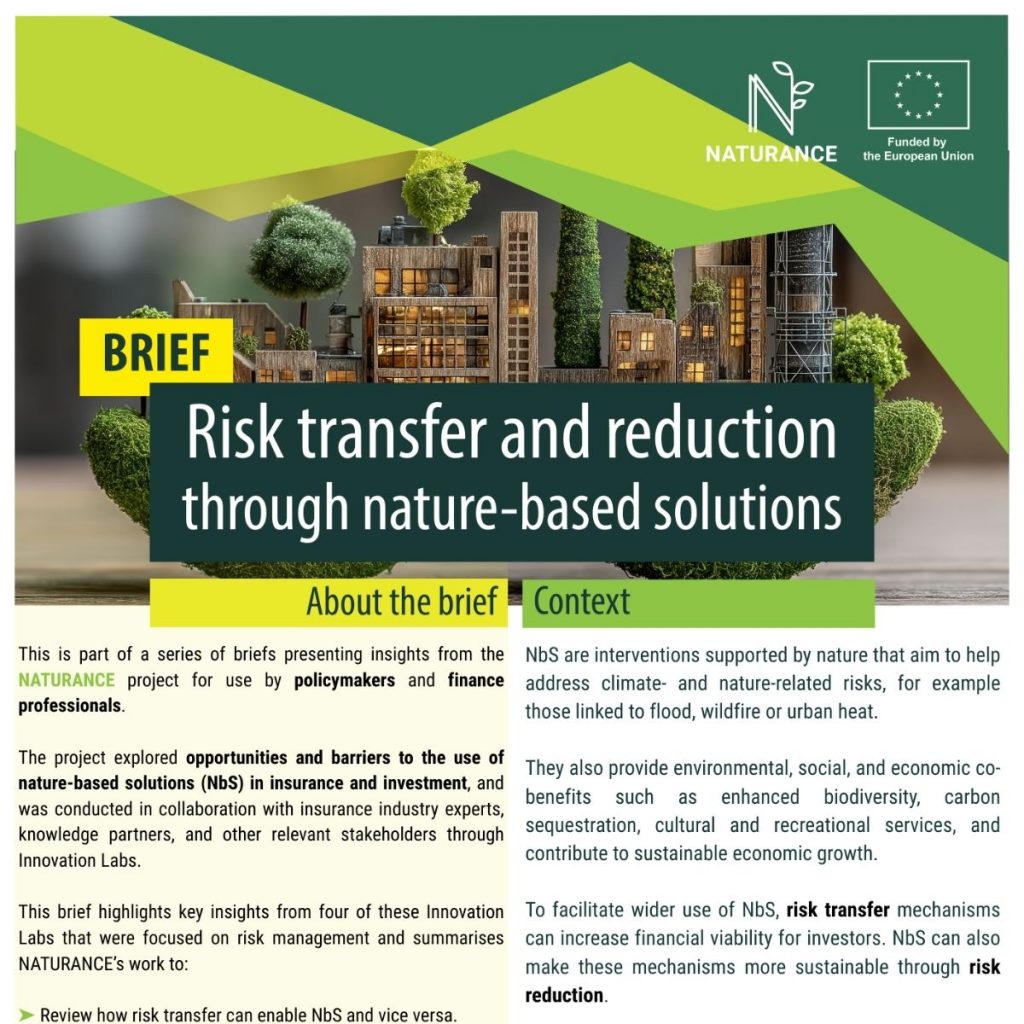
This brief highlights key insights from four of the Innovation Labs that were focused on risk management and summarises NATURANCE’s work to: Review how risk transfer can enable NbS and vice versa; Explore opportunities for supporting greater NbS use in the contexts of: Resilience of UK housing and the built environment to withstand flooding; Rising wildfire risk due to climate change and land use pressures; flood risk management in Italy given increased glacial melt/precipitation; Urban heat action plans in Europe.
The NATURANCE Consortium – 2026
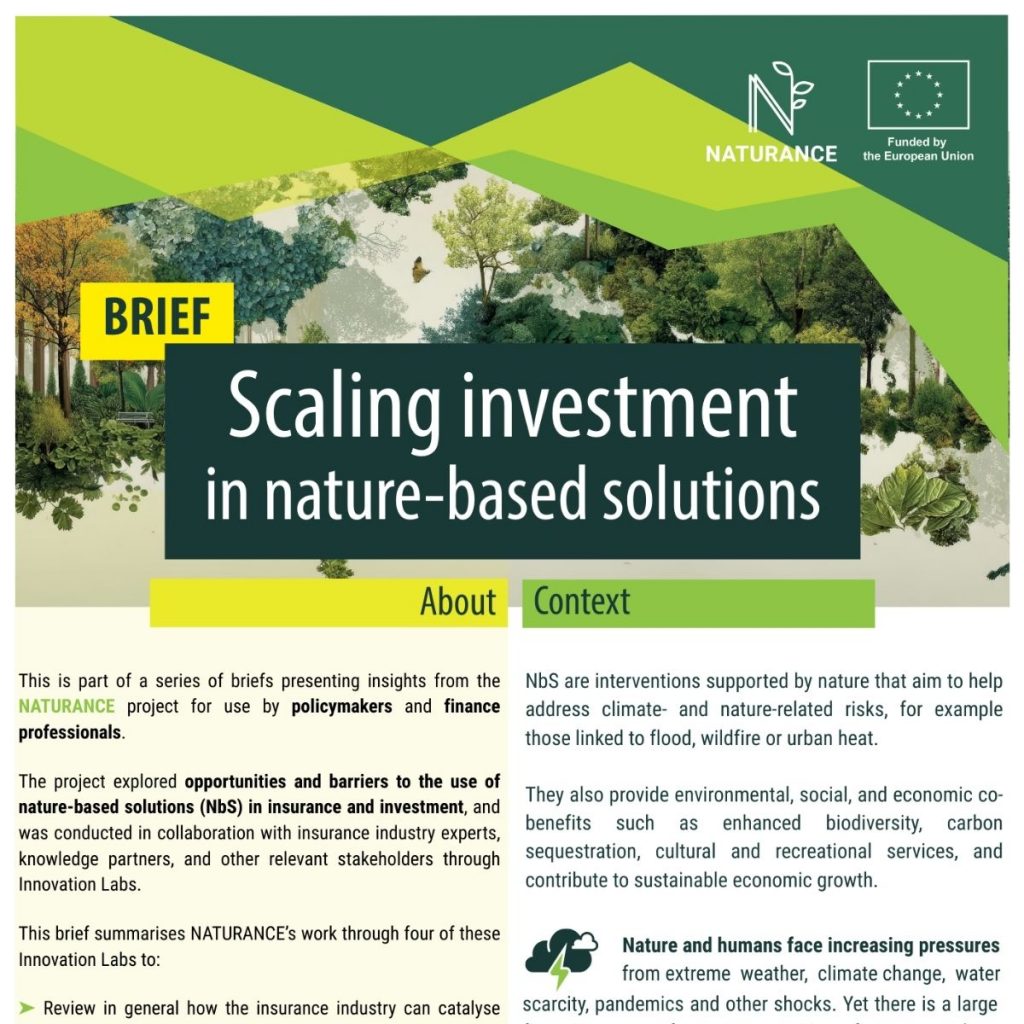
This brief summarises NATURANCE’s work across four Innovation Labs. It reviews how the insurance industry can catalyse investment in NbS and identifies key enablers to help overcome existing barriers. It also explores investment opportunities in NbS in several specific contexts: conservation within the EU’s protected area network, resilience finance and urban green infrastructure, and wetland restoration.
The NATURANCE Consortium – 2026
This brief presents an improved, evidence-based approach to quantifying and monetising the co-benefits of Nature-based Solutions. The aim is to enable more accurate valuations that can guide and encourage wider use of these solutions.
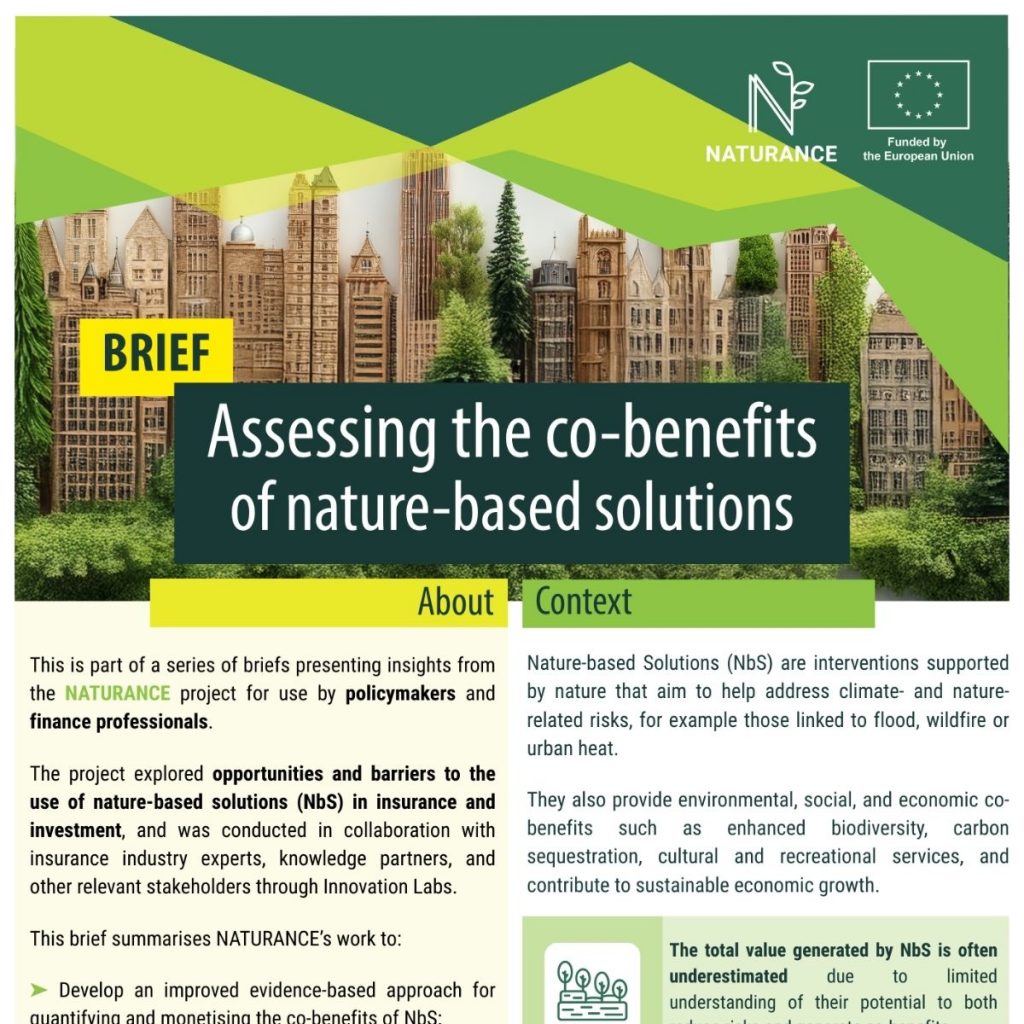
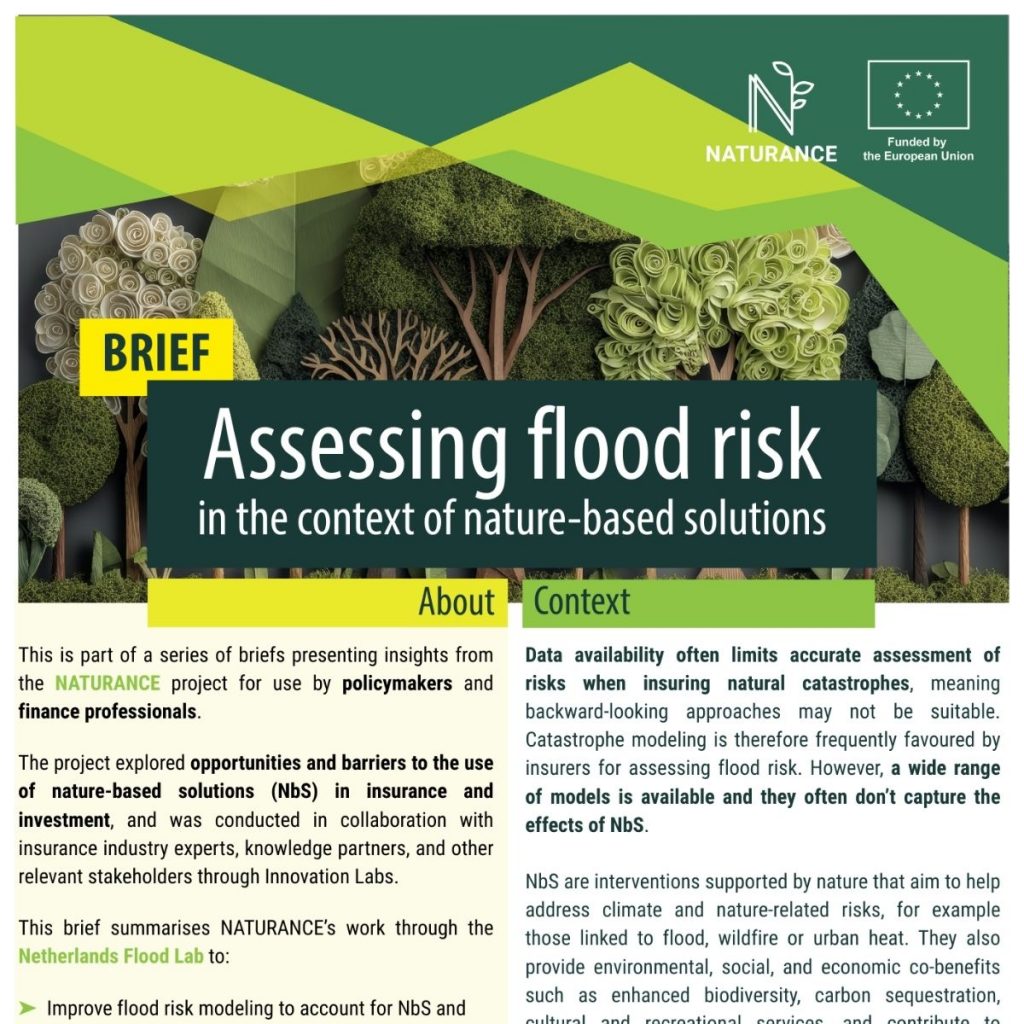
The NATURANCE Consortium – 2026
This brief presents efforts carried out through the Netherlands Flood Lab to improve flood risk modeling by incorporating Nature-based Solutions, allowing for more accurate risk pricing. It also aims to support the development of well-informed flood adaptation strategies.
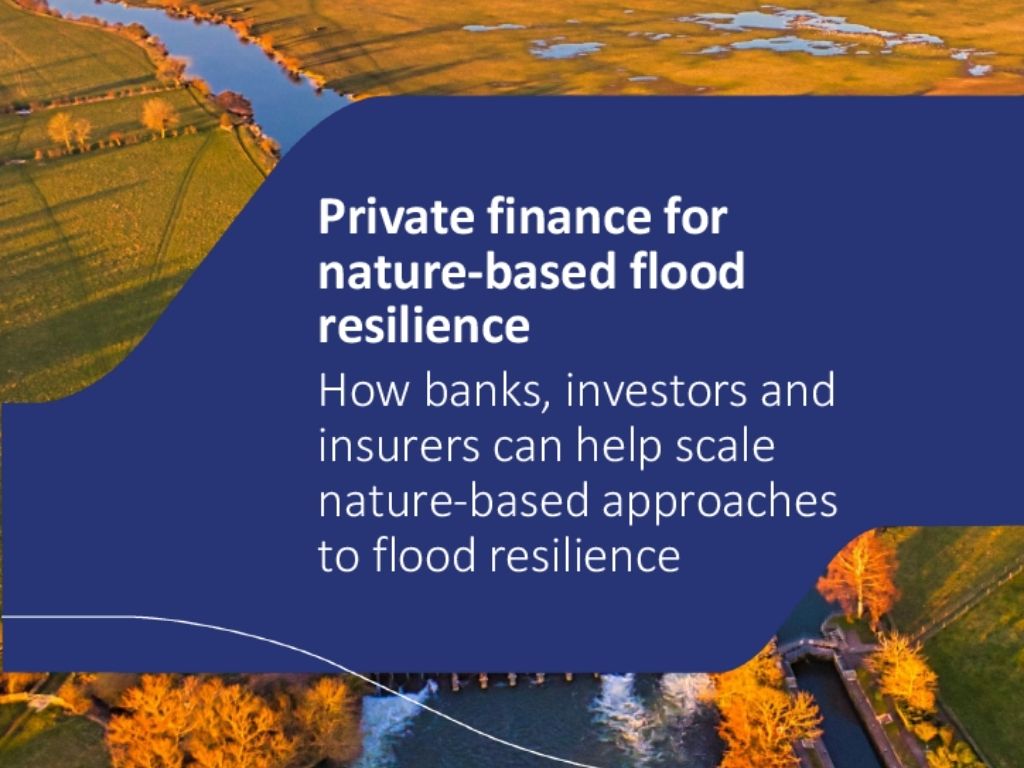
Martin C. S., Alvey F., Bruzzone L., Cyriax E., et al. (2026)
Martin J., Aguilera-Rodríguez J., Linnerooth-Bayer J., et al. (2026)

Amaratunga D., Mysiak J., Resch C., Nissanka S. (2025)
Martin C., Middleton J., Small S. and Seega N. (2025)
Sherry M. and Kassian J. (2024)
Deltenre L., Seega N. (2023)